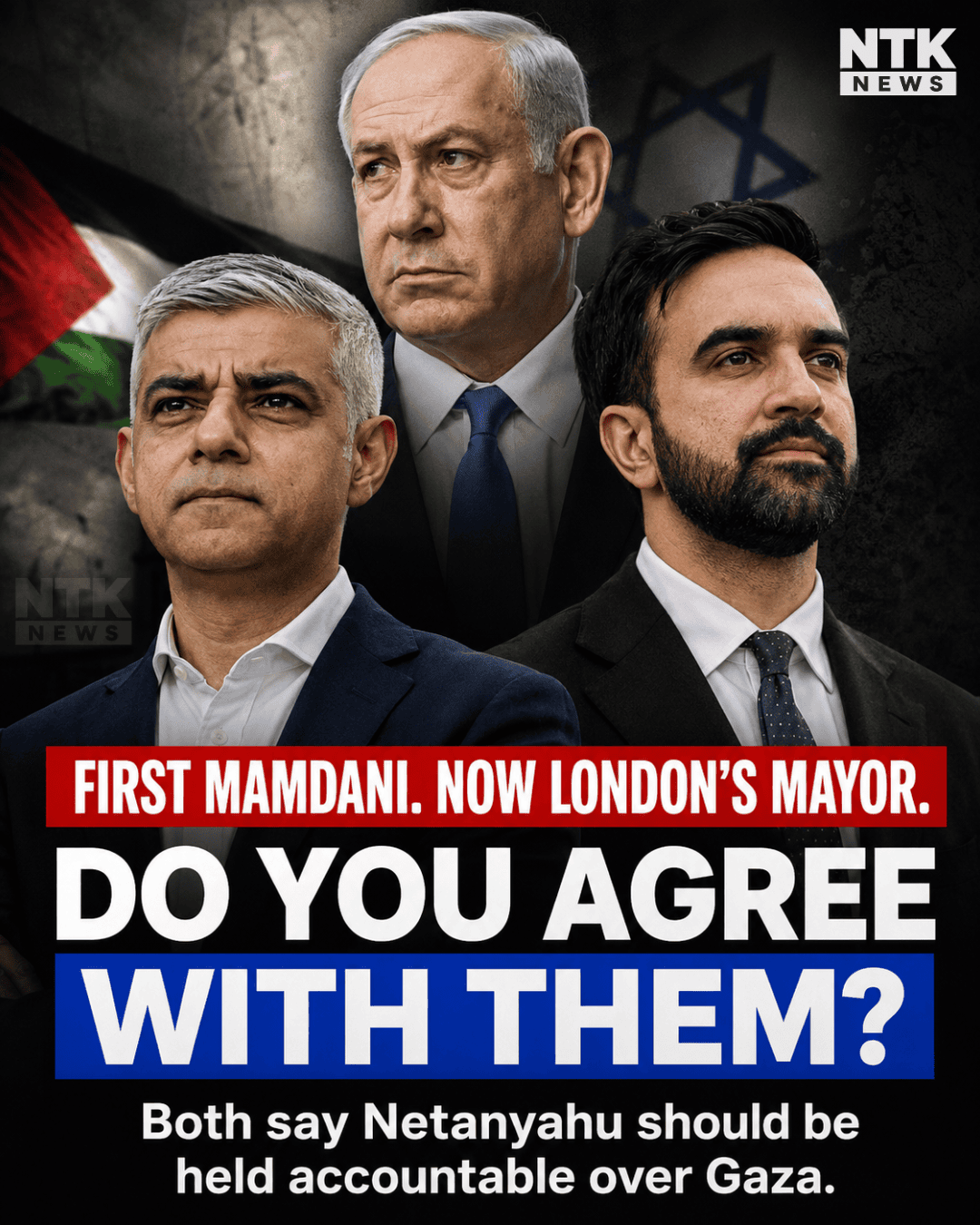
London Mayor Sadiq Khan has added his voice to growing international criticism of Israeli Prime Minister Benjamin Netanyahu, saying he believes a genocide is being committed in Gaza and that Netanyahu should be brought to justice.
Khan’s remarks are significant not only because of their bluntness, but because they come from one of the most prominent political figures in the United Kingdom. They also follow similar criticism from New York political figure Zohran Mamdani, helping build a wider pattern of increasingly direct language from high-profile Western voices over Israel’s conduct in Gaza.
What Sadiq Khan said
In his statements, Khan said: “I do believe a genocide is being committed in Gaza. I think Netanyahu is responsible.”
He then went further, adding: “And as a perpetrator of genocide, I think he’s broken the law. And I think justice needs to happen, and that means him being brought to book.”
Those are among the strongest words yet from a major British political figure. Khan did not limit his criticism to general concern over the humanitarian crisis. Instead, he directly linked Netanyahu to what he described as criminal responsibility and argued that legal accountability should follow.
That matters because public figures in the West have often used far more cautious language when discussing Gaza, usually referring to humanitarian suffering, civilian casualties, or the need for restraint. Khan’s framing goes beyond that and speaks in terms of genocide, criminal responsibility, and justice.
Why these remarks are drawing attention
Sadiq Khan is not a fringe commentator or activist. He is the Mayor of London, one of the most visible Muslim politicians in Europe, and a high-profile figure within British public life. When someone in that position uses language this forceful, it naturally attracts attention well beyond local politics.
His comments are also notable because they reflect a broader shift that appears to be taking place in political discourse. For a long time, accusations of genocide in Gaza were mostly heard from activists, legal scholars, rights groups, and sections of the international community. Increasingly, however, elected figures in Western democracies are using the same language more openly.
That shift does not mean there is political consensus. Far from it. The question of whether Israel’s actions in Gaza legally amount to genocide remains contested in many official circles, and governments such as the United States, United Kingdom, and others have often avoided adopting that label. But the political space around the issue is clearly changing.
The Mamdani connection
The mention of “first Mamdani, now London’s mayor” captures why this story resonates online. Zohran Mamdani has become known for forceful criticism of Israeli policy and outspoken support for Palestinian rights. Seeing another prominent figure speak in similarly direct terms creates the impression that what was once politically risky language is becoming more mainstream in certain circles.
For supporters of Palestinian rights, this is seen as a sign that the scale of devastation in Gaza is becoming too difficult for influential politicians to ignore or soften. For critics, it may be viewed as inflammatory or legally premature. Either way, the language being used is clearly escalating.
The legal and political backdrop
The genocide question has become central to international debate over Gaza. South Africa’s case at the International Court of Justice placed the issue at the heart of legal scrutiny, while the International Criminal Court has also become part of the broader conversation around accountability for alleged war crimes and crimes against humanity.
It is important to distinguish between political statements and formal legal findings. A politician saying genocide is being committed is not the same as an international court issuing a final ruling. However, such statements shape public opinion, influence political pressure, and help frame how history may judge the conflict.
Khan’s comments therefore sit at the intersection of law, politics, and morality. He is not acting as a judge, but he is using the language of legal accountability to make a political and ethical argument.
Why this matters in Britain
Britain has seen sustained protests, heated parliamentary debate, and deep public disagreement over Gaza. The conflict has become a defining issue for many Muslim communities, younger voters, human rights campaigners, and anti-war activists. It has also exposed tensions within major political parties over how strongly to criticise Israel and whether calls for accountability should go further.
Khan’s words are likely to be welcomed by many Londoners who have been demanding stronger condemnation of Israel’s military actions. At the same time, they are likely to provoke backlash from those who believe such claims are one-sided or legally unproven.
But regardless of where people stand, the political reality is this: when the Mayor of London uses language this direct about Netanyahu, it reflects the intensity of public pressure surrounding Gaza and the extent to which the issue has reshaped political debate.
The wider question
The bigger issue raised by Khan’s remarks is whether more Western leaders will begin speaking with similar clarity. If they do, the diplomatic and political implications could grow quickly. Public criticism from elected leaders does not itself create legal outcomes, but it can contribute to an environment where calls for sanctions, arrest warrants, travel restrictions, or wider accountability measures become harder to dismiss.
For critics of Israel’s conduct in Gaza, that is precisely the point. They argue that words should eventually lead to consequences. For defenders of Israel, the fear is that such rhetoric prejudges legal questions and fuels political hostility.
What is no longer in doubt is that the debate has moved into a new phase. The language being used by prominent political figures is becoming sharper, the accusations more serious, and the demands for accountability more direct.
Sadiq Khan’s remarks are part of that shift. Whether people agree with him or not, they add to a growing chorus saying the devastation in Gaza is not just a humanitarian issue, but a matter of alleged criminal responsibility at the highest level.
As more public figures speak out, the pressure on governments, courts, and international institutions is only likely to intensify.