What Happened
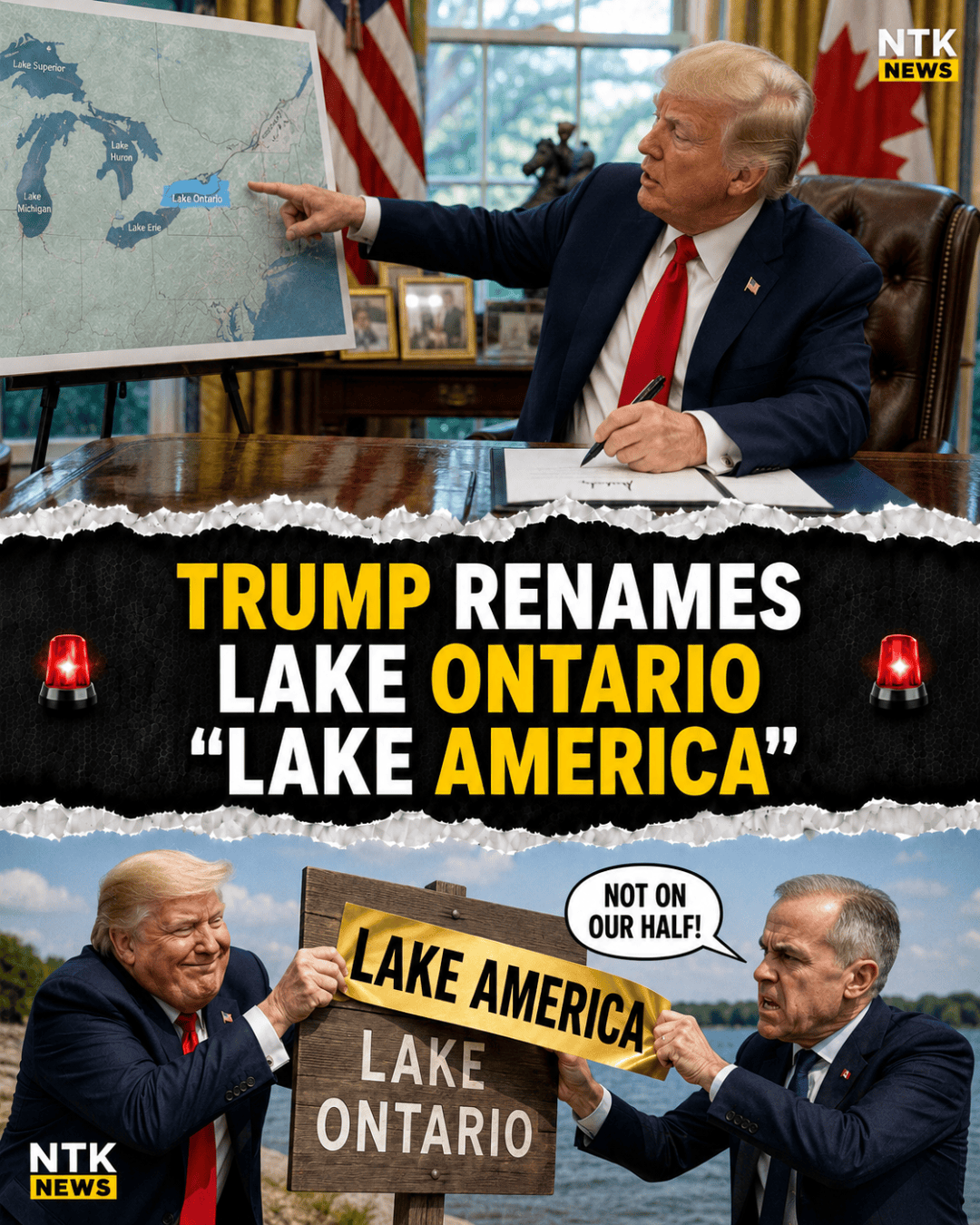
President Donald Trump signed an executive order on Thursday, 27 August 2026, directing the United States federal government to refer to Lake Ontario as “Lake America.” The directive mandates that federal agencies update official references across maps, documents and contracts within 30 days. While the change applies strictly to U.S. federal systems, it has triggered immediate resistance from Canada and opposition within New York State.
The order does not compel foreign nations or state governments to recognise the new name. Consequently, a split is emerging where U.S. federal agencies use the president’s preferred designation while Canadian authorities and New York State continue calling it Lake Ontario. This creates competing labels for the same body of water, with the dispute unfolding against a backdrop of widening trade conflict between Washington and Ottawa.
The Timeline
The renaming order was signed on Thursday, 27 August 2026, following days in which President Trump floated the idea to his administration. The executive order specifically directs the Interior Department and the U.S. Board on Geographic Names to update the federal Geographic Names Information System (GNIS). Federal agencies are required to implement these changes within a strict 30-day window.
By Friday evening, 28 August 2026, private mapping services had already begun reacting to the mandate. MapQuest posted a statement refusing to change the name, writing “Name it whatever you want at your leisure” alongside an image labeling the lake with a sarcastic caption. The post garnered more than 4.7 million views by Friday evening, raising questions about whether other major providers like Google Maps will follow suit.
Who Said What
Canadian Prime Minister Mark Carney has rejected the move outright, declaring: “It remains Lake Ontario then, now and always.” Canada has not agreed to the change and is not expected to recognise “Lake America” as the lake’s official name. Industry Minister Mélanie Joly reinforced this stance, stating, “We’re proud of our Great Lakes.”
Domestically, New York Governor Kathy Hochul announced that her state will continue calling it Lake Ontario, placing New York’s government at odds with the new federal policy. U.S. Senate Minority Leader Chuck Schumer criticized the order, calling it “sad and pathetic.” Meanwhile, President Trump defended the action during the signing ceremony, noting, “If you think about it, we have a gulf and we have a lake, now all we need is an ocean.”
The Numbers That Matter
Lake Ontario is the smallest of the five Great Lakes by surface area, covering approximately 7,340 square miles. By volume, it is the second-smallest, holding about 393 cubic miles of water according to the National Museum of the Great Lakes. Its deepest point reaches about 802 feet, while its average depth is roughly 283 feet.
The lake’s drainage basin covers about 72,500 square kilometers and includes portions of both the United States and Canada. The executive order requires federal agencies to update their records within 30 days, a deadline the administration must now enforce while navigating diplomatic friction with Ottawa and New York.
Why This Matters
The dispute is not over the physical lake or its location, but rather over who has the power to define the name. The order arrives as Trump continues promoting an America First political agenda and confronting Canada over trade. Supporters may view “Lake America” as an expression of national pride and presidential authority, similar to the administration’s decision last year to rename the Gulf of Mexico.
Critics, however, are likely to view the move as unnecessary political theatre that risks inflaming relations with a close neighbour. The immediate disagreement highlights the limits of executive power: while the president can direct federal agencies, he cannot force every state government, foreign country, media organisation or private mapmaker to use the same name.
The name “Lake Ontario” dates to the 17th century and comes from an Indigenous term meaning “lake of shining waters.” Changing the name in Washington does not guarantee that the public will adopt it. If implemented as written, “Lake America” could become the required name across U.S. federal agencies while “Lake Ontario” remains the recognised name in Canada and New York State.
This split could affect federal maps, websites, government contracts and official communications without changing what millions of people continue to call the lake. For now, the lake remains exactly where it has always been, but the political fight is over what governments will print beside it. Newsweek has contacted Google for comment on whether it plans to adopt the “Lake America” name following MapQuest’s rejection.