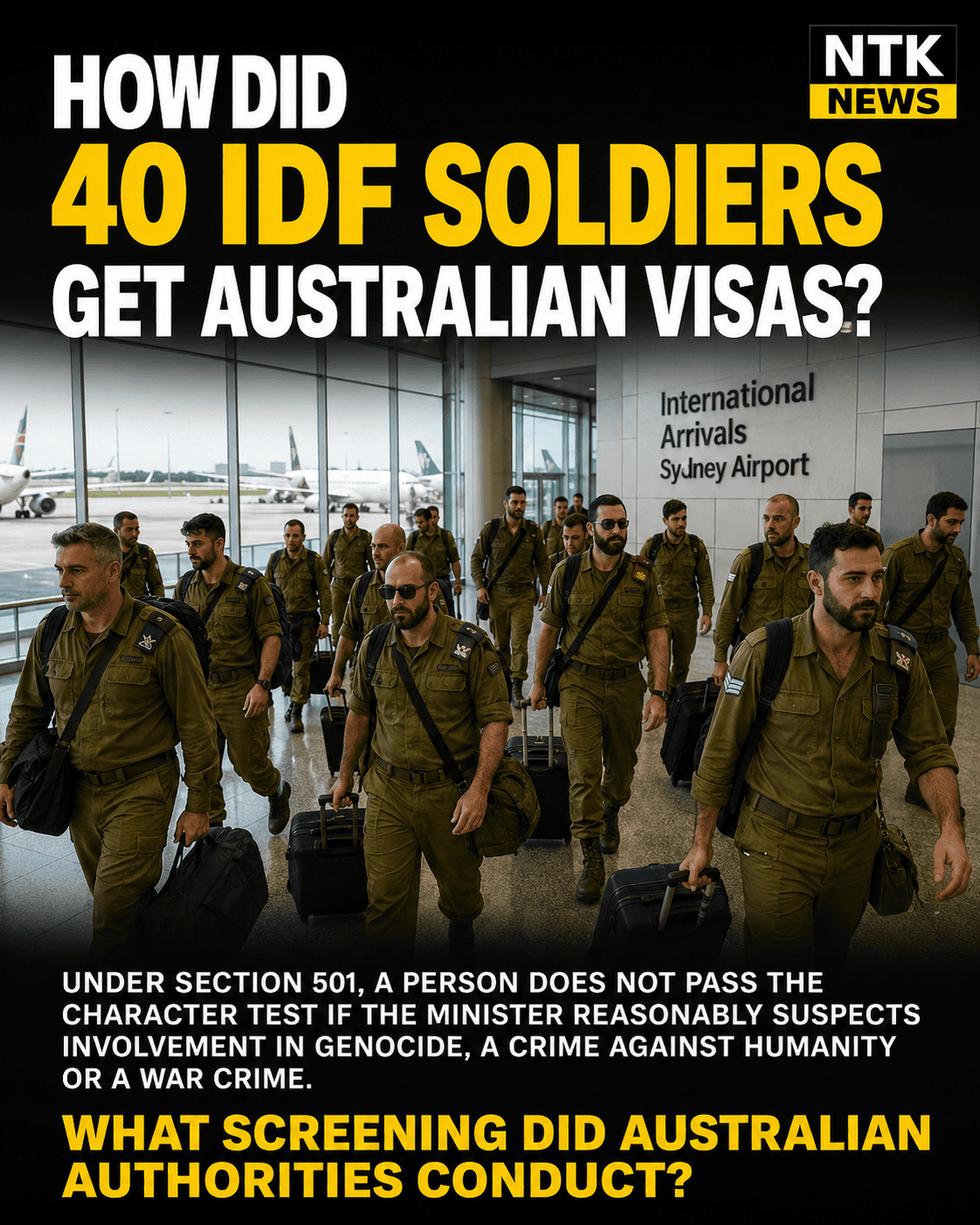
What Happened
Australia’s visa character rules explicitly cover suspected involvement in genocide, war crimes and crimes against humanity. That has created an unavoidable question following the reported entry of 40 Israeli soldiers, including current and former Israel Defence Forces personnel, for the Sydney Marathon: what screening did Australian authorities conduct before granting them permission to enter?
The Department of Home Affairs has said that every non-citizen must satisfy Australia’s identity, health, character and security requirements. It also says applications are assessed individually.
However, the department has declined to explain what additional checks, if any, were applied to these visitors, citing privacy protections surrounding individual visa cases. That response does not resolve the central issue.
Australians are not asking for private addresses, medical records or unrelated personal information. They are asking whether the government applied its own character-test provisions to people who reportedly served in military operations in Gaza, the occupied West Bank or Lebanon.
The Timeline
On 26 August 2026, reporting described a situation where a comedian’s visa was sabotaged while war crimes suspects were cheered through. This event highlighted the disparity in how different applicants are treated under the same legal framework.
The Australian Centre for International Justice called for stronger screening after reports that at least 39 Israeli nationals were in Australia for the Sydney Marathon. The organisation asked Home Affairs to establish the nature of each person’s military service, including their unit, rank, responsibilities and deployments.
Home Affairs has responded by saying all non-citizens are assessed against the Migration Act and Migration Regulations, including character and security criteria. It has also said decisions are made on a case-by-case basis.
Who Said What
The Australian Centre for International Justice argued that credible information indicating possible involvement in torture, genocide, war crimes or crimes against humanity should be referred to the Australian Federal Police, with entry refused or deferred while the matter is assessed.
Those requests did not declare every person who served in the IDF guilty of an international crime. They demanded individual scrutiny—the very process Australia’s character requirements are supposed to provide.
Home Affairs states that a person may not pass that test if the minister reasonably suspects they have been involved in genocide, a war crime, a crime against humanity, torture, slavery or another crime of serious international concern. A criminal conviction is not required for that particular ground to become relevant.
The department may request police certificates, detailed personal information, a statement of character or documentation covering previous military service. Its own published guidance says applicants may be required to submit a military certificate or a Declaration of Service.
Why This Matters
Military service alone does not establish personal criminal responsibility. However, simply accepting that distinction cannot replace an investigation into where someone served, what role they performed, which unit they belonged to and whether credible evidence connects that unit or individual to unlawful conduct.
The law therefore gives Australian authorities both the power and the tools to investigate credible concerns. The unanswered question is whether those tools were meaningfully used before the soldiers were allowed to enter.
Privacy should not prevent the government from describing the general screening process used for a group whose entry has generated significant public concern. Home Affairs could explain whether enhanced military-service checks were conducted without releasing private information about any individual.
The question is straightforward: if Section 501 is intended to protect Australia from people reasonably suspected of involvement in genocide, war crimes or crimes against humanity, how did 40 IDF soldiers receive permission to enter—and what evidence satisfied the government that they passed the character test?
Australia cannot claim that suspected involvement in international crimes is relevant to the character test while refusing to explain how that rule was applied to military personnel arriving from an active conflict. Were any names checked against publicly available evidence, international investigations or material concerning alleged abuses?